
Home security doesn’t have to mean expensive alarm systems or complicated technology.
Some of the most effective security improvements are straightforward, affordable, and make an immediate difference in how safe your home actually is. Here are ten upgrades that deliver real protection.
1. Upgrade to Grade 1 Deadbolts
Not all deadbolts are created equal. The ANSI grading system rates locks on security:
- Grade 3: Basic, minimal security
- Grade 2: Adequate for most homes
- Grade 1: Highest residential security
Why It Matters
Grade 1 deadbolts are tested to withstand:
- 10 strikes with a 75-pound force
- 250,000 cycles of opening and closing
- Advanced picking and drilling attempts
Most homes come with Grade 3 locks that provide minimal actual security. Upgrading to Grade 1 deadbolts on all exterior doors is one of the single most effective security improvements you can make.
Cost vs. Value
Grade 1 deadbolts cost $50-150 each, and professional installation adds $50-100 per lock. For most homes with 2-3 exterior doors, this upgrade costs $200-500 total—a fraction of what you’d pay for a security system, with immediate, permanent benefits.
2. Reinforce Door Frames with Security Strike Plates
Even the best lock is useless if the door frame is weak. Most doors come with flimsy strike plates held by 1/2-inch screws.
The Upgrade
Install heavy-duty security strike plates that:
- Cover a larger area of the door frame
- Use 3-inch screws that reach into the wall studs
- Distribute force across a wider area
This simple upgrade makes kick-in attacks dramatically more difficult. When someone tries to force your door, the frame holds instead of splintering.
Implementation
Security strike plates cost $10-30 each and can be installed in minutes. This is one of the most cost-effective security improvements available.
3. Install Smart Locks for Better Access Control
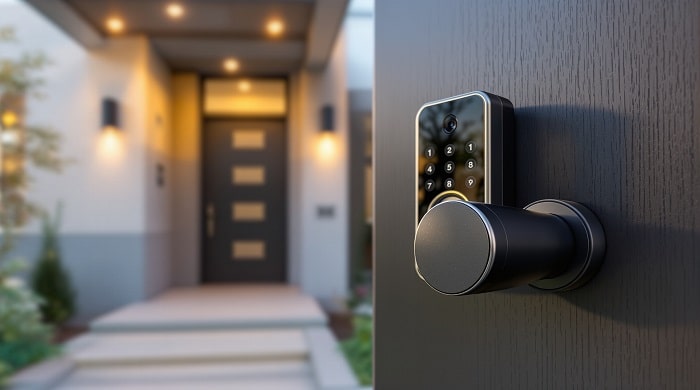
Smart locks aren’t just convenient—they’re more secure than traditional keyed locks in several ways.
Security Advantages
Smart locks provide:
- Audit trails: See exactly when doors were locked/unlocked and by whom
- Temporary access codes: Give contractors or guests limited-time access
- Remote locking: Lock doors from anywhere if you forget
- No key vulnerabilities: Can’t be picked like traditional locks
- Automatic locking: Doors lock themselves after a set time
Choosing the Right Smart Lock
Look for smart locks with:
- Backup key override (in case batteries die)
- Grade 1 or Grade 2 certification
- Encrypted communication
- Integration with your other smart home devices
4. Secure Sliding Doors Properly
Sliding glass doors are common entry points for burglars because they’re often secured only by a simple latch.
Effective Sliding Door Security
Implement multiple layers:
- Security bar or rod: Prevents the door from sliding even if the lock is defeated
- Pin locks: Drill through both door frames and insert a removable pin
- Anti-lift devices: Prevent doors from being lifted off tracks
- Locking system upgrades: Replace inadequate latches with proper locks
The Reality
Standard sliding door latches can be forced in seconds. Proper security bars cost $15-40 and make forced entry nearly impossible.
5. Rekey All Locks When Moving In
One of the biggest security mistakes is moving into a new home without rekeying the locks. You have no idea how many copies of the keys exist or who has them.
Why Rekeying Matters
Previous owners, their family members, contractors, real estate agents, cleaning services, and maintenance workers may all have had keys. That’s potentially dozens of copies floating around.
The Solution
Professional rekeying changes the internal pins so old keys no longer work. Services like the official Locksmith For NYC website can rekey multiple locks quickly and affordably—typically $20-50 per lock, far less than replacing them entirely.
Rekey within days of moving in, before you’ve fully settled. This ensures only you and authorized individuals have access to your home.
6. Add Security Film to Ground-Floor Windows
Glass is a vulnerable point. Security film doesn’t prevent breaking, but it makes entry significantly more difficult and time-consuming.
How It Works
Security film holds shattered glass together, preventing quick entry even after the window is broken. Burglars typically move on rather than spending extra time and making additional noise trying to get through filmed windows.
Installation
Professional installation costs $6-15 per square foot. DIY kits are available for $30-100 per window. Focus on ground-floor and easily accessible windows for the best value.
7. Install Motion-Activated Exterior Lighting
Burglars prefer darkness. Motion-activated lights eliminate that advantage.
Strategic Placement
Install motion-activated lights at:
- All entry points (front door, back door, side doors)
- Garage and driveway areas
- Dark corners where someone could hide
- Along paths leading to doors
Features to Look For
Modern motion lights offer:
- Adjustable sensitivity to reduce false triggers
- LED bulbs for brightness and longevity
- Weather-resistant construction
- Wide detection angles
Cost
Quality motion-activated LED lights cost $20-80 each. Installation is simple for most homeowners, or electricians charge $50-150 per light.
8. Secure the Garage
The garage is often the most vulnerable entry point because people treat it casually.
Garage Security Checklist
- Keep the garage door closer remote inside, not in your car where thieves can grab it
- Cover garage windows so people can’t see when you’re away
- Lock the door between garage and house with a quality deadbolt
- Install a slide bolt on the inside track to prevent forced opening
- Unplug the garage door opener when away for extended periods
Why This Matters
Once inside your garage, intruders have privacy and time to work on the door to your home. Treating the garage as part of your security perimeter is essential.
9. Install a Video Doorbell
Video doorbells serve multiple security functions beyond just seeing who’s at the door.
Security Benefits
Video doorbells provide:
- Visual deterrent: Visible cameras discourage porch pirates and burglars
- Package monitoring: See when deliveries arrive and who approaches
- Activity log: Review who came to your door when you weren’t home
- Two-way audio: Communicate with visitors without opening the door
- Motion alerts: Know when someone approaches, even if they don’t ring
Choosing a System
Popular options range from $100-250 and require either battery charging or hardwiring to your existing doorbell wiring. Look for models with good night vision and wide-angle lenses.
10. Create the Appearance of Occupancy
Many burglaries happen during the day when homes appear empty. Making your home look occupied deters casual criminals.
Effective Tactics
- Use timers or smart switches for interior lights on varied schedules
- Leave a car in the driveway if you have multiple vehicles
- Don’t advertise absences on social media
- Have mail and packages held or collected by neighbors
- Maintain your yard even when away
- Use radio or TV timers to create sound
Low-Tech, High-Impact
These strategies cost little to nothing but create the impression someone is home, which is often enough to make burglars move to easier targets.
Implementing Your Security Upgrades
You don’t need to do everything at once. Prioritize based on your home’s specific vulnerabilities:
High Priority (Do First):
- Grade 1 deadbolts on all exterior doors
- Reinforced strike plates
- Rekey all locks
Medium Priority:
- Smart locks or video doorbell
- Sliding door security
- Motion-activated lighting
Ongoing:
- Maintain appearance of occupancy
- Security film on accessible windows
- Garage security measures
The Bottom Line
Effective home security doesn’t require a massive budget or complicated systems. Most of these upgrades can be completed in a weekend for less than the cost of a single month of security monitoring.
The key is choosing upgrades that address real vulnerabilities rather than just making you feel more secure. Focus on entry points, make forced entry difficult and time-consuming, and create the impression your home isn’t an easy target.
Real security comes from layered protection—multiple barriers that together make your home more effort than it’s worth to criminals looking for easy opportunities.