
Key Takeaways
- Fairfax County is implementing sustainable design and construction practices to enhance energy efficiency and environmental stewardship.
- Notable projects include energy-efficient upgrades in public schools and the integration of renewable energy sources in community centers.
- Collaborative efforts between the public and private sectors are advancing the county’s sustainability goals.
Table of Contents
- Introduction
- Energy-Efficient Upgrades in Public Schools
- Renewable Energy Integration in Community Centers
- Sustainable Data Center Developments
- Modernization of Water Treatment Facilities
- Green Building Certifications and Standards
- Collaborative Efforts for Sustainable Development
- Future Outlook and Ongoing Initiatives
Fairfax County is embracing sustainable design and construction practices to create resilient, energy-efficient, and environmentally friendly infrastructure that benefits present and future generations. By implementing innovative strategies and focusing on long-term results, the county is setting a high standard for sustainable growth in the region. For residents seeking to engage a construction company in Fairfax County, VA, these efforts pave the way for projects aligned with modern environmental priorities.
The county’s sustainability approach includes improving energy efficiency in public buildings, integrating renewable energy sources, pursuing green building certifications, and fostering collaborative relationships between public agencies and private entities. As Fairfax County rapidly expands, sustainable planning remains central to its mission to reduce environmental impacts while enhancing community well-being.
Energy-Efficient Upgrades in Public Schools
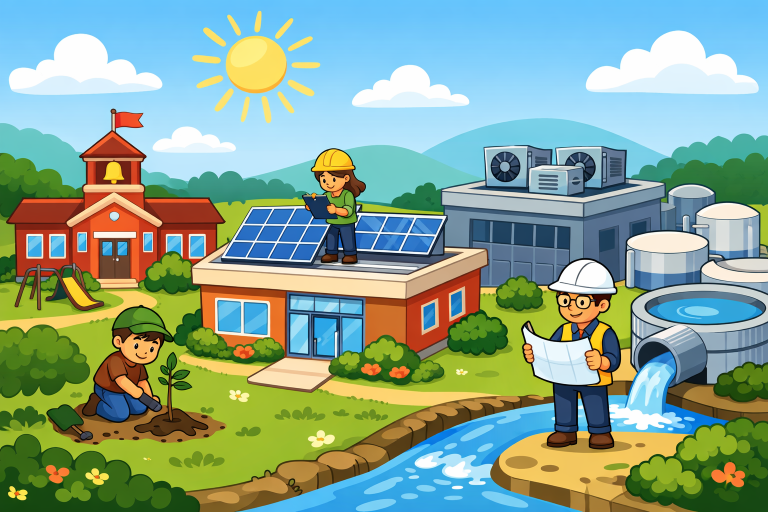
Fairfax County Public Schools (FCPS) represents a major success story in reducing energy consumption and greenhouse gas emissions. Since 2014, FCPS has achieved a 31 percent reduction in energy use, far exceeding its 10-year target of 20 percent. Over 28 million square feet of school facilities benefit from these upgrades. Remarkably, FCPS managed these results despite adding more than three million square feet of new space and accommodating over 180,000 students. These achievements translated to over $100 million in cumulative energy cost savings. By adopting advanced HVAC systems, LED lighting, and behavior-based energy conservation training, FCPS set a blueprint for future energy efficiency improvements.
Renewable Energy Integration in Community Centers
The Sully Community Center in Chantilly highlights Fairfax County’s push for clean energy. Its extensive rooftop solar photovoltaic installation generates about 267 megawatt-hours of electricity each year, roughly matching the energy needs of 30 average homes. This solar investment will generate estimated savings of $1 million over 25 years for the county, while also improving local air quality by reducing carbon emissions. Projects like these demonstrate how renewable energy can be integrated into community spaces to benefit both the environment and taxpayers.
Sustainable Data Center Developments
As cloud infrastructure and data demand proliferate nationwide, Fairfax County is home to forward-thinking data center initiatives. In Chantilly, development firm Penzance has partnered with Amazon Web Services (AWS) on a new 45MW, 240,000 square-foot data center designed with air-cooled systems and rooftop HVAC units for optimal energy efficiency. Scheduled for completion in early 2027, this facility reflects the growing trend of major technology firms prioritizing operational sustainability.
Modernization of Water Treatment Facilities
The Noman M. Cole, Jr. Water Recycling Facility recently completed a $79 million, 14-year modernization initiative. Facility upgrades included new switchgear, motor control centers, and enhanced electrical, instrumentation, and safety systems, ensuring the plant’s reliability for the next four decades. These comprehensive improvements not only guarantee safer water recycling operations but also reduce energy waste, further advancing Fairfax’s climate action and resilience objectives.
Green Building Certifications and Standards
Fairfax County continues to demonstrate its commitment to high-performance and sustainable construction standards. Several public buildings, including schools, have earned certification through the Collaborative for High Performance Schools Virginia (CHPS VA), focusing on energy efficiency, indoor air quality, water conservation, and the use of sustainable building materials. Looking ahead, the county is evaluating future projects for LEED or Green Globes certification, ensuring that new developments align with nationally recognized benchmarks. Achieving such certifications not only yields operational cost savings but also fosters healthier spaces for occupants and the surrounding community.
Collaborative Efforts for Sustainable Development
The county’s progress toward sustainability has been strengthened by strong collaboration between government agencies and private partners. The partnership between the Fairfax County Park Authority and the Office of Environmental and Energy Coordination has already resulted in recognition, with a 2024 ASHRAE Technology Award for Cub Run Rec Center’s energy efficiency improvements. These alliances enable broader community participation, enhanced resource sharing, and innovative pilot projects, ultimately driving the widespread adoption of sustainable design and construction practices across Fairfax County.
Future Outlook and Ongoing Initiatives
Fairfax County’s Fiscal Year 2027–31 Capital Improvement Program lays a clear path for future resilience. Planned projects aim to modernize infrastructure, reduce emissions, and minimize the environmental impact of further growth. As the county continues to expand, investments in sustainable design and construction will remain a central pillar of strategic decision-making. Residents, builders, and policy leaders can expect ongoing initiatives focused on energy savings, renewable energy adoption, and technological innovation across all facets of the built environment.
Through a comprehensive sustainability vision, Fairfax County serves as a leading example for communities nationwide. Its investment in resilient, energy-efficient, and environmentally conscious infrastructure benefits current residents and future generations.