

Key Takeaways
- SD-WAN enhances network performance by intelligently routing traffic.
- It reduces operational costs by efficiently using bandwidth.
- SD-WAN improves security with integrated, centralized policies.
- It offers scalability to accommodate business growth and changing needs.
Table of Contents
- Introduction to SD-WAN
- Enhancing Network Performance
- Cost Efficiency and Bandwidth Optimization
- Strengthening Security Measures
- Scalability and Flexibility
- Real-World Applications
- Conclusion
Introduction to SD-WAN
Software-Defined Wide Area Network (SD-WAN) technology is revolutionizing how enterprises manage their networking infrastructure. By separating the network hardware from the software control functions, SD-WAN enables businesses to operate more efficiently, reducing IT headaches and complexity. With SD-WAN, companies can achieve higher network performance using cost-effective internet services while replacing or augmenting expensive legacy WAN technologies. Discover how the best SD-WAN solutions are shaping the future of business connectivity by merging performance, agility, and security.
By leveraging centralized control, SD-WAN enables seamless policy management, application prioritization, and secure connections across branch offices and remote workforces. This approach not only supports current operational requirements but also positions enterprises for long-term digital transformation by providing flexible, programmable network architectures. As enterprises increasingly adopt cloud applications and services, the importance of resilient, intelligent networking continues to grow.
Enhancing Network Performance
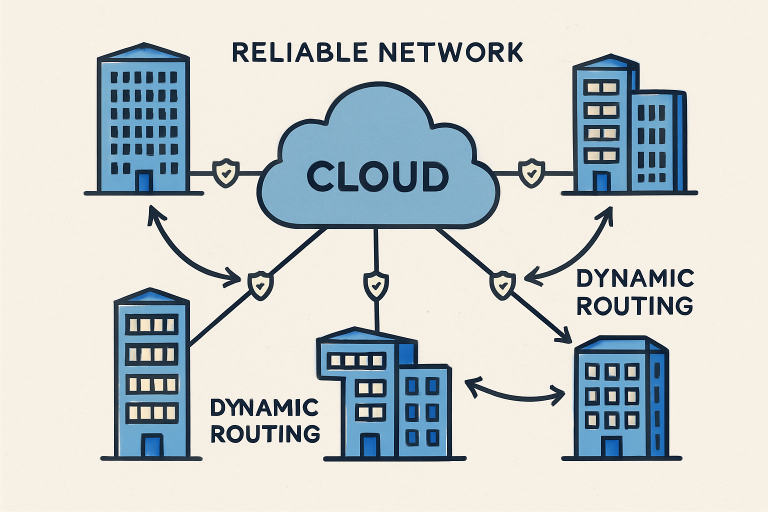
One of the most significant advantages SD-WAN brings to enterprise IT is its ability to optimize network efficiency. Traditional WANs are plagued with static routing, which often leads to bottlenecks or underutilized resources. SD-WAN, by contrast, employs dynamic, application-aware routing to direct traffic to the fastest, most reliable connections automatically. This ensures that critical applications, such as video conferencing or cloud-based business tools, always receive top priority and adequate bandwidth, regardless of network congestion or external disruptions.
As more organizations rely on SaaS platforms and cloud-based workloads, SD-WAN’s intelligent path selection is invaluable in minimizing latency and improving the end-user experience. Real-time monitoring and analytics allow network administrators to proactively identify performance issues and adjust routing policies before they impact operations. Modern SD-WAN solutions even leverage artificial intelligence and machine learning to automate these processes, further reducing manual intervention and enabling rapid troubleshooting.
Cost Efficiency and Bandwidth Optimization
Enterprises have long struggled with the high costs of traditional private WAN connections, such as MPLS. SD-WAN provides a cost-effective alternative by allowing organizations to utilize lower-cost broadband, LTE, and fiber connections. By aggregating multiple connection types and dynamically allocating traffic, SD-WAN maximizes bandwidth while minimizing the need for expensive dedicated circuits. The broad adoption of these flexible networks has enabled businesses to achieve comparable or superior performance at a fraction of previous costs.
Moreover, SD-WAN’s intelligent traffic prioritization and advanced compression techniques ensure that available bandwidth is used as efficiently as possible. By preventing non-essential or low-priority traffic from clogging network pathways, organizations can maintain high service quality and avoid unnecessary upgrades. The resulting operational savings are especially attractive for companies with distributed offices or those undergoing rapid growth, as SD-WAN reduces both fixed and incremental networking costs.
Strengthening Security Measures
With cyber threats on the rise, enterprises need robust, adaptive security controls at every network edge. SD-WAN integrates advanced security features including next-generation firewalls, intrusion prevention, and powerful encryption across all connections. These tools work together to deliver real-time threat detection, automated mitigation, and continuous monitoring without the need for separate security appliances at each location. This approach not only modernizes network defense but also consolidates management, making it far easier to enforce consistent policies enterprise-wide.
Centralized security control is especially critical for compliance in regulated industries. Unified security policies can be pushed instantly across a global network, ensuring standardized protection while supporting faster incident response. SD-WAN further simplifies compliance by generating detailed, location-specific logs and audit trails, reducing regulatory reporting burdens for IT departments.
Scalability and Flexibility
As business needs evolve, IT infrastructure must scale quickly to accommodate new users, offices, and applications. SD-WAN stands out for its ability to provision new sites and resources in minutes rather than weeks. With zero-touch deployment and cloud-managed orchestration, network expansion becomes far less labor-intensive. Enterprises can also easily integrate remote and hybrid work models, connecting employees to business resources regardless of location.
Flexibility extends beyond physical growth; SD-WAN’s programmable architecture supports rapid shifts in traffic patterns and application usage as business priorities change. Whether integrating a new acquisition or deploying the latest cloud services, companies can adapt their networks on demand. As hybrid and multi-cloud environments become standard, SD-WAN ensures seamless, secure connectivity across all platforms, eliminating the silos of legacy WANs. For further insight on how modern networks benefit from agile infrastructure, visit TechRepublic.
Real-World Applications
Across industries, enterprises are adopting SD-WAN to streamline operations and maintain a competitive advantage. After a merger, for example, a sporting goods manufacturer used SD-WAN to integrate its new business units, enabling secure, high-performance access to shared resources across multiple clouds. The solution simplified onboarding for new offices, minimized disruption, and protected sensitive data, all while leveraging affordable broadband links rather than costly MPLS connections. According to Network World, organizations from finance to healthcare are reaping similar benefits by supporting branch transformation, digital customer service, and rapid disaster recovery through SD-WAN adoption.
The versatility of SD-WAN enables businesses to address unique challenges, from supporting mobile sales teams to unifying global ecommerce platforms. By providing a secure, high-speed backbone for all types of business applications, SD-WAN proves essential for organizations committed to digital growth and innovation.
Conclusion
SD-WAN is driving a paradigm shift in enterprise networking by delivering the performance, security, cost efficiency, and scalability modern businesses demand. Through streamlined management and future-proof architecture, SD-WAN positions enterprises to succeed in a cloud-first, always-connected world. Organizations that embrace these technology advances can expect to simplify their networks, improve flexibility, and unlock new opportunities for innovation and collaboration.