

Some people might think that keywords are no longer important in Search Engine Optimization (SEO), but what’s really happening is a change in how we use them. Keywords still matter, but search engines now look at content and user intent in more detail.
Instead of matching single words, search engines try to understand what people actually want to find out. Because of this, just using separate keywords isn’t enough if you want your website to show up near the top of search results.
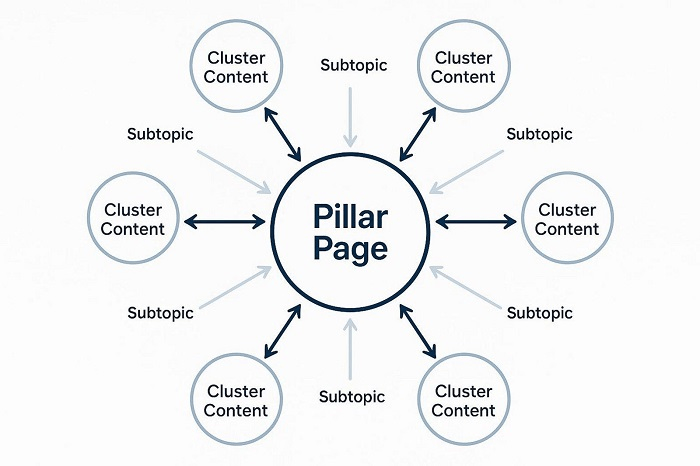
A new method called topic clusters is now key – it groups your content around central ideas, making your website a complete and trusted resource. This is now a must for anyone aiming to succeed in today’s fast-moving world of SEO, whether you’re working on SEO in Norway or anywhere else.
Google’s search algorithms, especially since the Hummingbird update in 2013 and RankBrain in 2015, have become very skilled at finding out what users really mean when they search. Instead of looking for exact keyword matches, Google now tries to understand context and intent. Because of this, topic clusters are now very helpful-they fit well with how search engines now process and rank content.
Why Traditional Keyword Strategies Are Fading
For a long time, people working in SEO spent a lot of time researching and targeting single keywords, hoping to rank well for each one. This often resulted in websites with lots of unrelated articles, which did not always give users a clear or helpful experience.
This method sometimes worked, but in today’s search environment, its shortcomings are more obvious.
How Have Search Engines Changed Their Approach to Keywords?
How search engines, especially Google, handle keywords has changed a lot. Older search engines matched queries to exact keywords on a page. Now, thanks to updates like Hummingbird and RankBrain, Google tries to understand what people really want, not just what they type in. Google now looks at full phrases and sentences.
Another key change came with Google’s 2022 helpful content update, which rewards websites that provide useful material that directly helps users. This moves the focus away from stuffing pages with keywords and more toward making helpful and detailed resources.
With smarter, AI-driven algorithms, search engines can now see connections between different searches and understand the full context. Even if someone doesn’t use the exact same words, Google looks for pages that most closely answer their questions. Organizing your website with topic clusters, instead of just focusing on single keywords, meets this new way search engines work.
What Are the Downsides of Keyword-Focused SEO?
Only targeting individual keywords today has some real problems. First, it can cause websites to have disconnected articles, which makes it hard for users and search engines to figure out what your site is really about. This lack of structure can hurt your reputation as an expert on a topic.
Second, focusing on one keyword at a time keeps your content from covering a subject in full detail. Visitors may not stay or return if you don’t answer all their questions or explore the topic fully. Third, if your site depends on one main keyword and Google changes how it ranks that keyword, your traffic can drop suddenly.
A website with well-built topic clusters is much less affected by these changes and shows expertise across many related searches.
Topic Clusters vs. Keyword-Based SEO: Key Differences
Switching from keyword-based SEO to topic clusters is a big change in how you plan your content. Keywords still matter, but now they’re more like pieces that fit into a bigger puzzle. Knowing what sets these approaches apart is important for doing well in SEO today.
How Do Topic Clusters Show User Intent Better Than Single Keywords?
Topic clusters do a better job of answering what users want because they look at a broad subject and cover many questions and related points. One page focused on a single keyword usually only solves one need, but a topic cluster has a main “pillar” page plus supporting articles that cover everything people want to know. For example, someone searching “how to start a business” may want info, tools, or even to find consultants.
With a good topic cluster, each of their needs is answered somewhere in your group of pages. This matches how search engines now try to match their results to what people really want.
Search intent can change as people move through stages: first learning about something (informational intent), then looking at options (commercial intent), then ready to buy (transactional intent), or finding a specific website or product (navigational intent). Topic clusters help you make content for all these needs within a well-organized group of pages.
Why Are Topic Clusters Safer from Algorithm Changes?
Topic clusters keep your site safe from sudden changes in Google’s ranking formulas because they show that your site is a real expert on a topic instead of just jumping on short-term trends.
When your website covers a subject fully, Google is more likely to trust your pages, even if how it ranks certain keywords changes. This approach also shows off your experience, knowledge, and authority. If one keyword loses value, the cluster as a whole still pulls in traffic, so your overall performance is steadier.
What Are Topic Clusters and How Do They Work?
Topic clusters are a way of organizing your website content so it’s all connected and easy to follow. Instead of a bunch of separate articles, you have a clear, linked group of pages focused on one main subject. This helps users find related information easily and makes your site stand out as an expert source.
What Is a Pillar Page?
The pillar page is the center of your topic cluster. It’s like the main stop in a train system. This page gives a broad look at a single topic, touching on smaller points but not going into all the details. For example, a pillar page about “social media marketing” might provide short sections on listening, planning, and analytics, but link out to more detailed pages on each item.
A good pillar page is a strong starting point, covering the topic enough to answer general questions, while preparing the ground for 20-30 connected posts. Longer pillar pages (well over 3,000 words), according to research, can draw the most organic visitors.
What Is Cluster Content?
Cluster content, also called “spoke pages,” includes articles about specific subtopics mentioned on the pillar page. These pieces go deeper, explaining each part with examples and real explanations. For example, if the pillar page briefly mentions social media analytics, a cluster page might fully explain and give examples for that concept.
With cluster pages, you can target “long-tail” keyword searches-longer, more specific phrases that people might use. By making many connected cluster pages, your site covers every part of your main topic, proving you’re a true expert.
How Do Internal Links Hold Topic Clusters Together?
Internal links are what join all the pages in your topic clusters. The pillar page links to each cluster page, and each cluster page links back. Cluster pages can also link to each other if needed.
This linking does two key things: it helps search engines clearly see which page is the main authority, and it makes it easy for users to move between pages and find what they need. That way, everyone-including Google-can understand how your content fits together. Good internal linking helps your whole topic cluster perform better and keeps people exploring more pages.
How Topic Clusters Improve SEO Results
Using topic clusters has several benefits that directly improve your SEO. By organizing your content neatly, your website is easier to find, builds more trust, and brings users back-all important factors in SEO today.
Do Topic Clusters Bring More Organic Visitors?
Yes, topic clusters can greatly increase organic traffic. By carefully covering a topic and its subtopics, your site becomes useful for many types of search queries. Each supporting page targets its own specific set of keywords, pulling in visitors with different needs.
The success of your pillar page helps all cluster pages perform better by sharing link authority, so ranking higher with one page means your whole cluster can rise together. This organization keeps people on your website longer, tells Google your content is strong and useful, and leads to higher search rankings.
How Do Topic Clusters Show Authority?
Building authority in your field is much easier with topic clusters. When you write in-depth, high-quality content that covers nearly every angle of a subject, Google recognizes your website as an expert source.
Using clusters-one pillar with many supporting articles-makes your experience and knowledge visible. This can help your site rank for many related searches, not just a handful of keywords. Other websites are also more likely to link to you as a trusted source, which further increases your authority.
How Do Topic Clusters Affect Search Rankings?
Topic clusters help your whole website organize its information, which makes it easier for search engines to scan and understand your material.
When your site uses clusters, Google clearly sees how pages connect and what they’re about. As the pillar page gains strength, that lifts up all linked cluster pages as well, helping you rank well for both general and specific queries.
Because clusters cover user intent so well, they also improve your website’s metrics like time on site and number of pages per visit, which are positive signs for ranking higher. Sites in the #1 spot on Google get around 27.6% of all clicks, showing just how valuable this strategy can be.
Why Do Search Engines Prefer Structured Content?
Search engines prefer structured content because it’s easier to scan, understand, and serve up accurate answers to users. When content is grouped into topic clusters, Google can quickly tell what your site’s main focus is and how each piece fits into the big picture.
With well-placed internal links, your whole topic cluster is easy for both people and search engines to explore, building better search performance and giving users a smoother experience.
Steps to Create Effective Topic Clusters
Making good topic clusters takes a step-by-step approach, from choosing your main topics to connecting your pages and keeping your content fresh. It’s not just about producing more articles-it’s about planning and organizing them to help both your users and your SEO performance.
How to Decide on a Pillar Page Topic
Picking the right pillar page topic is the first and most important task. It should be wide enough to allow for several subtopics and should directly tie into what you offer. Choose topics that lots of people might search for.
Companies, for instance, might use “what is digital marketing” as a main topic. You can have more than one pillar page if you have several major themes, but start with one if you’re just beginning. Ensure the topic can anchor many subtopics to build out your cluster.
How to Find and Arrange Cluster Subtopics
Once you’ve chosen your main topic, list out the cluster topics that support it. Many will spin off from your pillar page naturally. To get more ideas, use Google autocomplete, People Also Ask, and “related searches.” Tools like Answer The Public and topic research features in SEO tools can also help.
For each subtopic, do keyword research to find useful long-tail keywords. These supporting pages help you attract users with specific questions and, together, give your site in-depth coverage.
How to Set Up Internal Linking
Having a strong linking system between your pages is very important. Your pillar page should link to each cluster page, and those should link back. If two cluster pages are closely related, link them too.
Use meaningful anchor text that clearly describes the linked page, not just “click here.” Search for more linking opportunities whenever you add new content, as the whole system grows stronger with good connections.
How to Fill Content Gaps in Clusters
Over time, gaps in your cluster content will appear as your field changes and new questions pop up. Keep an eye on your industry and listen to your users for ideas on what you’re missing.
When you spot a gap, write a new, detailed cluster page, then make sure the pillar page links to it. Regularly reviewing and expanding your cluster keeps your site useful and up-to-date.
How to Track and Improve Cluster Performance
Your work isn’t over once you build topic clusters. Use tools like Google Search Console and Semrush to watch how your pillar and cluster pages perform, looking at visits, rankings, and which keywords bring in traffic.
Check regularly for weak spots or outdated pages, and update your pillar page by adding new links and keywords. This ongoing process keeps your clusters fresh and effective, helping you stay visible in searches and relevant to your users.
Best Practices for Building and Maintaining Topic Clusters
Following some proven tips can help your topic clusters perform well and keep their value as time goes on. These focus on matching user needs, keeping content up to date, and organizing your site for easy use.
How to Match Content to Search Intent
Making sure your cluster content matches what people are searching for is very important. Your clusters should answer all types of intent: learning something new, comparing options, buying, or getting somewhere specific.
For example, in a web design cluster, one page might teach the basics (“How To Create a Basic Web Design?”), another might help people compare agencies, another could be a downloadable report, and another can offer a special trial or demo.
Regularly check what users are searching for and update your clusters so that every part fills a real user need.
Why Updating Pillar Pages Matters
Keeping your pillar pages current is key to holding onto their value and rankings. As information changes, update your stats, add new links, and include fresh keywords.
Adding new cluster pages? Link them back from your pillar page. This lets search engines know your site is alive and well-managed, which helps keep your rankings high.
How User Feedback Makes Clusters Better
User feedback tells you exactly what your audience wants, what questions they have, and what topics you might not have covered. Collect this feedback through surveys, comments, FAQ analysis, or even asking directly at the end of articles. Use what you learn to make new cluster pages or update existing ones, helping your content stay relevant and effective.
How to Lay Out Your Site for Clustered Content
Having a clear structure for your clusters is key. Set up pillar pages as main hubs, then branch out to cluster pages. Use organized headings and easy-to-follow site menus.
A main navigation link, for example, can lead to a pillar page, which then branches to specialized cluster pages (“SEO,” “Content Marketing,” etc.). Features like a table of contents on long pages also help both users and search engines get around your site quickly and easily.
Examples of Successful Topic Clusters
Real-life examples show what successful clusters look like. Here are a few:
|
Website |
Pillar Topic |
Cluster Highlights |
|
Backlinko |
SEO Marketing |
57 pages, ranks for 29,000+ keywords, 158,000+ visitors, 165,000+ backlinks |
|
Hootsuite |
Social Media Marketing |
Pillar “What is Social Media Marketing?” links to content about analytics, listening, etc. |
For instance, Backlinko’s cluster on SEO marketing leads to huge traffic and authority. Hootsuite’s cluster lets readers move from the basics to in-depth guides easily. This smart linking and full coverage show how to become a leader in your field.
Traits of Strong Topic Clusters
-
Clear, detailed pillar page as the main hub
-
Well-written, targeted cluster articles on important subtopics
-
Lots of links connecting every piece of content
-
Content that meets all types of user needs (learning, comparing, buying, etc.)
-
Regular updates and new posts to keep up with trends
Examples like Maze’s Guide to UX Research, Hotjar’s Heatmaps Guide, and Chameleon’s Digital Adoption Platform Guide all use these methods to bring good SEO results and a user-friendly experience.
Key Takeaways: Moving to Topic Clusters
SEO has changed from focusing just on keywords to building networks of content called topic clusters. Now, it’s about connecting topics and answering all your users’ needs across many pages. This matches how search engines find and organize information today. Topic clusters are more helpful for users, and they show search engines that your site is a reliable place to send searchers.
Building topic clusters is about growing a website that works for both people and algorithms. By fully covering your topic, linking content internally, and keeping everything updated, you can stand out as a true leader in your field.
This structured approach brings better results and helps keep your site strong and visible over time. In today’s competitive market, using topic clusters isn’t just a good idea-it’s a must for lasting SEO success and building your brand.