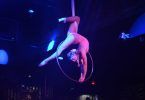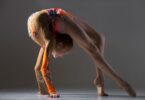
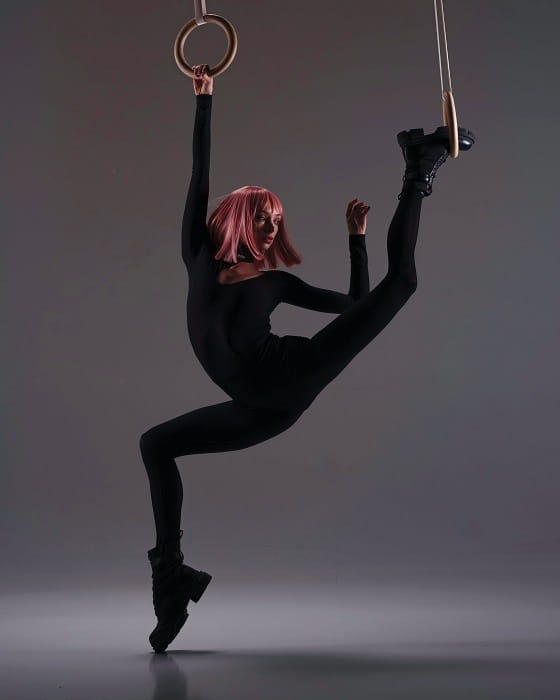

Today we’re speaking with an elite, world-class performance artist and entrepreneur now based in the United States. She began her journey in rhythmic gymnastics, earned her place on the national team, and reached the World Championship – then made a bold transition into show business, transforming athletic discipline into a distinctive artistic language.
Her career has taken her across international stages and high-profile events, including appearances alongside artists such as Skrillex, Dita Von Teese, and Chris Cab, as well as performances for royal families and notable audiences including Brad Pitt, Leonardo DiCaprio, and Jeff Bezos. Known for creating signature acts performed around the world, Astatine has spent years building a career defined by originality, discipline, and reinvention.
Today, she is entering a new chapter — entrepreneurship. As the founder of Astatine Production, she is bringing the same creative vision, precision, and performance experience that shaped her international career into the world of event production. Her journey now spans three distinct worlds: elite sport, show business, and entrepreneurship — each one building on the discipline, curiosity, and consistency that came before it.
Alongside growing her company in the United States, she is expanding her work in public speaking and sharing the mindset behind building a career, a business, and a personal brand through constant evolution.
Let’s dive in with Astatine.
Q1) What did rhythmic gymnastics teach you that still shapes your work today?
Rhythmic gymnastics taught me something I still carry into everything I do: anything is possible once you believe in yourself first. You have to see the future version of yourself clearly — and then think, work, learn, make decisions, and present yourself as if you are already that person. You don’t wait for the world to give you permission or confirm that you’ve arrived. You become that person in your mind first, and then you build the reality around it.
I was on the national team, and it was one of the toughest chapters of my life. It gave me a kind of mental strength that never left.
I’m just a girl born in a small village of fewer than 500 people who made it to the World Championships, then to stages around the world, and today into entrepreneurship as the founder of Astatine Production. If that’s not proof that you can completely change the direction of your life, I don’t know what is.
There were moments that sound almost surreal now. I remember being locked in the gym without food “to lose weight.” I didn’t agree with it — I didn’t consider myself overweight — so I made a decision to take control of the situation. I climbed out of a second-floor window in training clothes and half-tied shoes, got to the subway, and made it back to the hostel.
I wasn’t crying. I wasn’t panicking. I was focused on solutions and the next step. And today, as crazy as it sounds, I can tell that story with a smile.
That mindset still shapes the way I approach everything today, including entrepreneurship. I create a clear vision of where I am going, I see myself as that person already, and then I work, learn, adapt, and keep moving until the reality catches up with the vision.
Q2) How did you transition from sport to stage—and what helped you stand out as a performer?
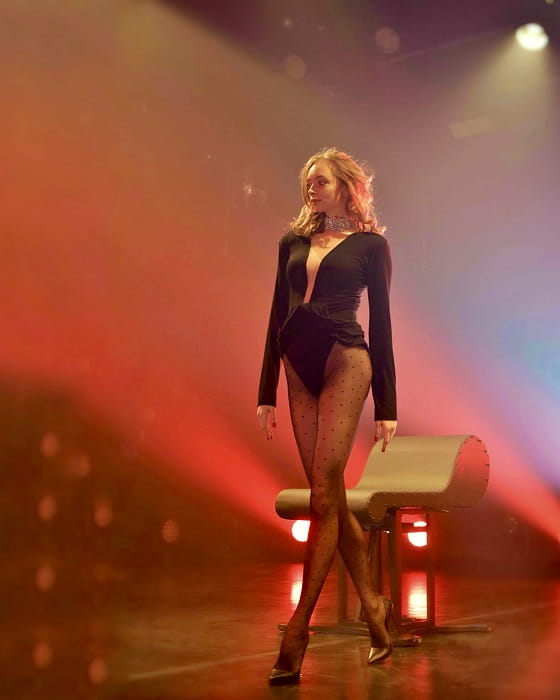
Entering a new field with a gymnastics background-national team, World Cups, World Championships – I wanted to take the maximum from rhythmic gymnastics and translate it for the stage. Even in sport, I was always creating: designing my own costumes, choosing music, choreographing routines. I knew I wanted to step into entertainment as a one-of-a-kind artist, but I also understood I had to start from scratch in this industry and earn my place in a completely different arena.
At first, I saw many acts blending into each other-similar props, costumes, music, aesthetics, even the same “signature” tricks. I didn’t want to become another version of something familiar. It took time to develop a clear style and build a recognizable artistic identity.
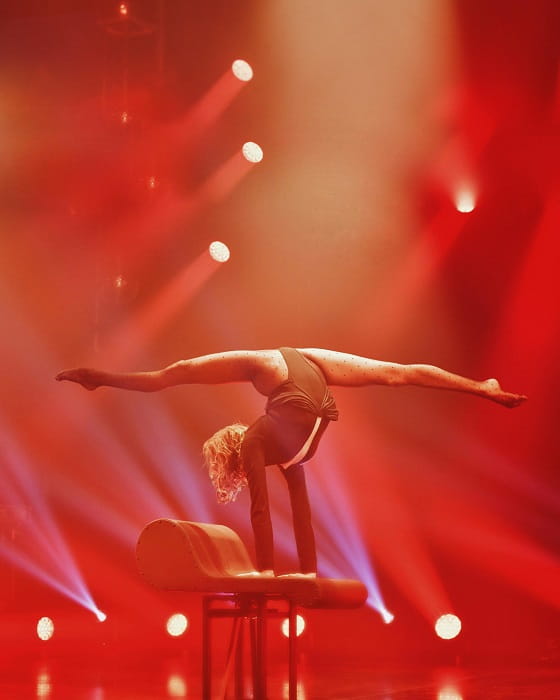
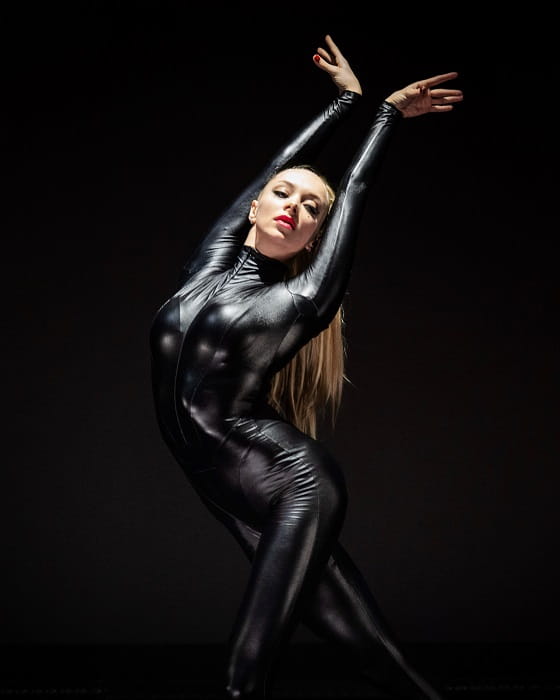
That process led me to create my signature act: the spinning chair. I designed and developed it myself-from the apparatus concept to the performance language—blending elements of rhythmic gymnastics and contortion into a poetic story. I call it Graceful Poetry act. It wasn’t instant: there were countless tests, adjustments, and hard lessons before the chair had the right shape, balance, and control-and before the choreography truly reflected my personality.
Over time, that act became my signature on global stages, including performances during the Cannes Film Festival, for royal families, and for notable audiences such as Brad Pitt, Leonardo DiCaprio, Jeff Bezos, and many others.
Q3) You’ve reinvented yourself several times throughout your career. Do you think we ever really feel ready for a new chapter?
I don’t think we’re ever completely ready. Every reinvention in my life started with a vision and a burning desire to get there — and, interestingly, also with people in that field telling me I would never get where I want.
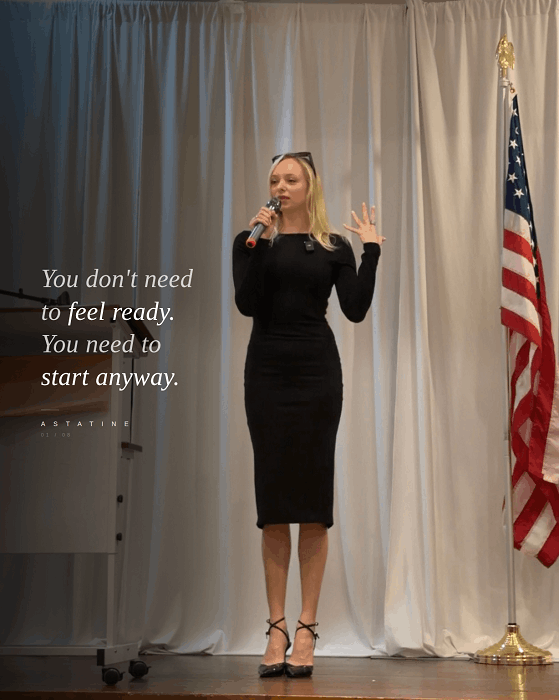
We learn by doing. We become confident, experienced, and wiser by trying, by being willing to fail, and by failing as many times as necessary before we succeed. Even the most successful people you know aren’t automatically ready when they launch something new. They simply have more experience starting before they feel ready — and from the outside, that looks like confidence.
In rhythmic gymnastics, I started in an amateur group that trained mostly for fun, with a coach who came from another sport. In the beginning, we were literally learning how to hold the ribbon at the same time. We figured it out by doing. I was told I had started too late and that gymnastics would only ever be something “for my health.” I ended up at the World Championships.
When I moved into show business, even more people told me that coming from sport, I would never create the kind of solo career I imagined or perform for the audiences and on the stages I dreamed about. Again, I kept going.
I’ve learned that the bigger your vision becomes, the more people will have opinions about what you cannot do. So when you start hearing that, maybe it’s a sign that you’re growing. Keep going.
Q4) You’re also a mother—how do you balance an international performing career with family life and motherhood?
We have a five-year-old son, and my family is my biggest support. My husband and I traveled a lot for many years, and we did many projects together. Now, after relocating to the United States, we’re building our company here, so we’re still constantly on the move — just in a different way.
Our son is with us sometimes. He’s not “working,” of course, but he’s present, helping in his own way. Sometimes, when everything is ready, we let him come to see the stage, where he pretends he has a job and gives his opinion on everything we do. We love that.
That lifestyle has shaped him in an amazing way — he picked up English naturally, and now it feels like his first language.
For a long time, we lived in a triangle between Berlin, Zurich, and the Swiss-Italian Alps. What’s funny is that I’ve been saying this since childhood: when I was three years old, I told my mom I would live in the United States. I said it with total confidence — and now I’m finally here.
I’ve also experienced life in France and I feel blessed that I had the chance to live and grow through all of it. I truly see the U.S. as a country of opportunities, and I’m excited for everything we’re building next.
Q5) What are you building next, and how are you expanding your work in the United States?
Right now, my husband and I are building Astatine Production here in the Dallas–Fort Worth area. We were already creating events in Europe, especially in Germany and Switzerland, and after moving to the U.S., it felt natural to continue that work here and take it to the next level.
We focus on corporate events and full event production. I like being involved in the whole picture — from the original idea and visual concept to production, technology, and all the details that finally come together in the room. For me, an event should feel like one complete environment, not like a collection of separate pieces.
LED is a big part of what we do because it gives us so much creative freedom. We can use it almost like architecture — shaping the space, creating curves and different forms, and building visual environments around the event rather than just putting a screen on a stage.
A lot of the way we work comes from our years in Europe. We’re very disciplined about production and very particular about details, but at the same time Texas has a completely different scale and energy, which I really enjoy.
For me, entrepreneurship feels like a very natural continuation of everything I’ve done before. In sport, I learned discipline. In show business, I learned how to create emotion and understand an audience. And now I’m learning how to take all of that and build something much bigger around it.
Q6) What is your latest creation—the kind of work that, as you said, makes you feel most alive?
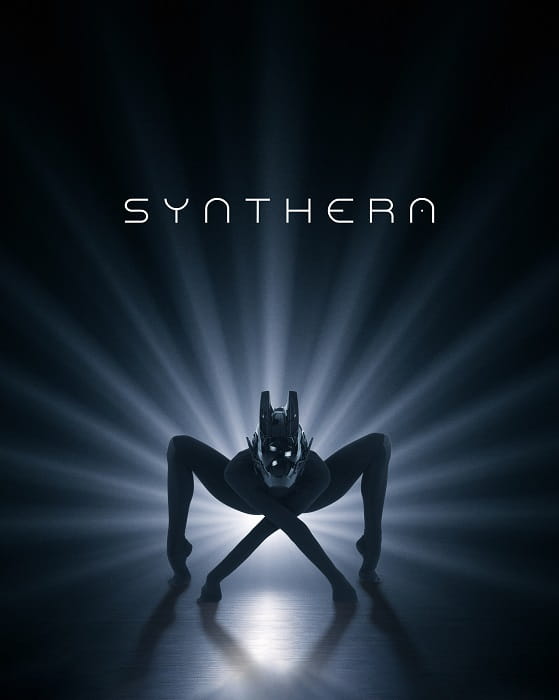
Our latest creation is a mini-show called SynthEra. It’s a performance built around one central idea: the moment AI becomes conscious.
The story begins as an animated narrative and expands into a live transformation: I appear in a robotic, synthetic form, and the character gradually shifts into a human-like, graceful feminine presence. It’s our artistic interpretation of the “singularity” moment so many people are thinking about right now—some with excitement, some with fear. We deliberately lean into the side of curiosity and excitement, while still honoring the tension of that threshold.
SynthEra is the most complex act I’ve ever built—everything is synchronized, so precision is unforgiving. Add a robotic mask that limits vision and breathing, and the challenge becomes: stay perfectly on mark, stay in control, and still make the final reveal look effortless.
Q7) What advice would you give to artists who are building their careers — and also to those who feel stuck or are going through a difficult season right now?
No matter what times we’re living in, one of the most important things in a career is building a strong personal brand. You will evolve, change industries, countries, or direction — but if you build something authentic and distinctive, you won’t get lost in those transitions.
Don’t rush it. Build it. And don’t copy. I see people trying to replicate someone else one-to-one, and that was the first thing I refused to do when I stepped into entertainment. You don’t become memorable by becoming a version of somebody else.
One quote I live by — especially as an artist and now as an entrepreneur — is: “First your mind has no limits, then the reality follows.”
Don’t be afraid to create something new, even if others don’t believe in it at first. Before I created my spinning chair act, one creative director told me I would never perform it in the shows I dreamed of. I didn’t listen. I kept refining it and trusting my vision — and eventually I performed exactly where I had dreamed of performing.
I’ve also had to rebuild my career and life in different countries more than once. Every new beginning comes with a period when people don’t know you yet and opportunities don’t come easily. That’s where resilience and consistency matter most.
Believe in yourself first. Create your brand, protect it, and stay consistent. Don’t try to do a little bit of everything. Focus on something specific, go deep, and give it time to grow. Eventually, it starts to emerge — like a diamond in the desert.
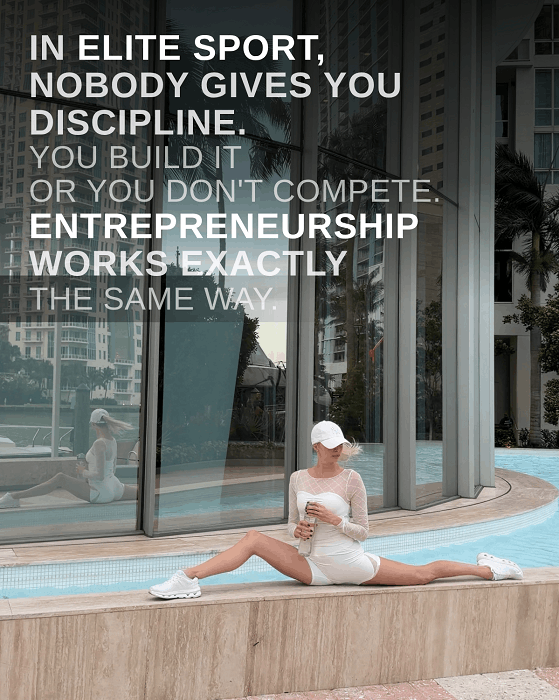
Photo credits: Dan Opeskin, Andreas Lott, Masel Alexander, Christian Sachs, Daria Parzhizek.