
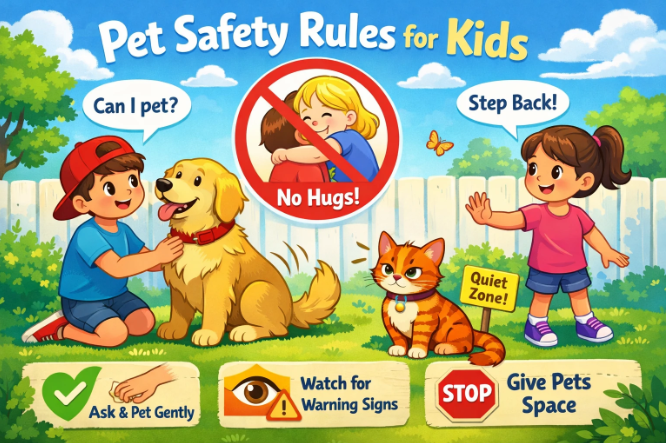

Kids and pets can be close fast. Accidents can happen fast too. A tight hug, a face too close, a quick grab at a tail. Small moments can turn into a scratch or a bite.
You can lower that risk with a few clear rules, quick practice, and the same adult response every time. This guide gives you simple pet safety rules for kids that work in real homes, not just on paper.
Start with three house rules
Keep the first rules short. Put them on the fridge. Say them out loud each day.
- Gentle hands. Open hand pets. No pulling fur, ears, paws, or tail.
- Face stays back. No kisses on pets. No nose to nose.
- Pets rest in peace. No touching a pet that eats, sleeps, hides, or cares for babies.
Adults should follow these rules too. Kids watch everything.
Teach the “Ask. Pause. Pet.” routine
Kids do better with a script. This one is easy to remember, even in a busy park.
- Ask: “Can I pet?” Ask the adult first.
- Pause: Stand still. Let the pet come closer.
- Pet: Use one hand. Pet the shoulder or chest. Stop after three seconds, then wait.
At first, it can feel strict. After a week or two, it feels normal, and the pet often stays calmer.
Teach kids what “no” looks like in body language
Many kids miss the early warning signs. Teach them the cues, then link the cues to one action.
Dog signs that mean “give me space”
- Turns head away
- Freezes or stiffens
- Tail low and still, or tight fast wag with a stiff body
- Licks lips with no food nearby
- Yawns in a tense moment
- Shows the whites of the eyes
- Growls or makes a low rumble
Cat signs that mean “stop”
- Tail flicks hard
- Ears turn sideways or flatten
- Skin twitches along the back
- Grooming starts right after touch
- Hiss, growl, or swat
- Wide pupils with a tense body
Tie it to one rule: “See the clues. Step back.”
For more dog focused tips and checklists, see Dog Guides.
Set “no go” zones and “hands off” times
Rules work better when the home setup supports them. Give your pet a safe spot, then protect it.
Good “no go” zones:
- Crate, bed, or a blanket corner
- Behind a baby gate
- Cat tree or a quiet room
Good “hands off” times:
- During meals
- During naps
- During training
- During recovery after a vet visit
This gives the pet real downtime. A calmer pet tends to react less.
Cut the top triggers that cause bites and scratches
Most unsafe moments fall into a few patterns. Teach these first.
Skip hugs
Kids hug to show love. Many pets feel trapped. Teach a replacement that still feels sweet.
- Side pats
- Toss a treat away from the child
- Blow a kiss from a step back
No grabbing items from mouths
Teach “trade,” not “take.”
- Toss a treat on the floor
- Adult picks up the item after the pet moves away
- Practice “drop” with an adult and treats
Default to side petting
Kids reach over the head. Some pets dislike that. Teach shoulder, chest, or side petting as the default.
No chasing
Chasing can scare a pet. Fear can lead to teeth or claws. Keep one simple rule: “Pets are not for running games.”
Pet safety rules by age
Match the rules to the child’s control level.
Toddlers
Toddlers move fast and grab fast. Keep contact short and adult led.
- Stay close. Keep one hand on the child.
- Use one word cues: “Soft.” “Back.” “Stop.”
- Use gates often. Gates beat lectures at this age.
Preschool kids
Preschoolers can follow a routine and practice a script.
- Practice “Ask. Pause. Pet.” each day.
- Use a timer for petting. Ten seconds, then stop.
- Give small helper jobs with you present, like filling water.
School age kids
School age kids can learn cues and take more responsibility with adult checks.
- Turn body language into a quick quiz game.
- Teach calm leash walking with adult hand over hand.
- Teach simple training cues like sit, touch, come, place.
Practice with quick games
Kids learn faster through play. Keep it short. Two minutes works.
- Statue game: Child freezes as the pet walks past.
- Three second rule: Pet for three seconds, then stop.
- Space bubble: Child takes two steps back on the cue word “bubble.”
Praise the action. Say “Nice gentle hands.” Say “Good step back.” That builds repeat habits.
Safe greetings with unfamiliar dogs
Public settings add risk. Kids get excited, dogs get overwhelmed, and things move fast. Give your child a clear script.
- Ask the owner from a distance.
- Stand sideways. Hands down.
- Let the dog sniff first.
- Pet the shoulder, then stop fast.
- Walk away when the dog jumps, barks, or stiffens.
One line kids remember: “No owner, no touch.”
Budget for safety gear and basic training
A few tools can make home rules easier.
Helpful items:
- Baby gates
- A crate or a clear “safe bed” zone
- Treat pouch for trade games
- Nail trims done by a pro when needed
- A leash and harness that fits well
If costs feel messy, use the 50/30/20 Pet Budget Rule to plan for gear, training, grooming, and vet care.
What kids do after a scratch or bite
Teach a calm response now, not in the moment.
- Step back. Hands to self.
- Tell an adult right away.
- Adult washes the wound with soap and running water.
- Adult checks bleeding and swelling.
Get urgent care for deep wounds, face wounds, heavy bleeding, fever, pus, red streaks, or strong pain. Contact a clinician fast for any bite that breaks skin.
Printable pet safety rules for kids
Put this list where kids can see it.
- I use gentle hands.
- I keep my face away from pets.
- I leave pets alone during food and sleep.
- I do not chase pets.
- I do not hug pets.
- I ask an adult before I touch.
- I step back when a pet walks away, growls, hisses, or stiffens.
- I tell an adult right away after any scratch or bite.
Start with two rules today. Practice for one week. Then add the next rule.